Beyond the Buy Button: Why Fulfillment Order Accuracy is Your Biggest Growth Lever
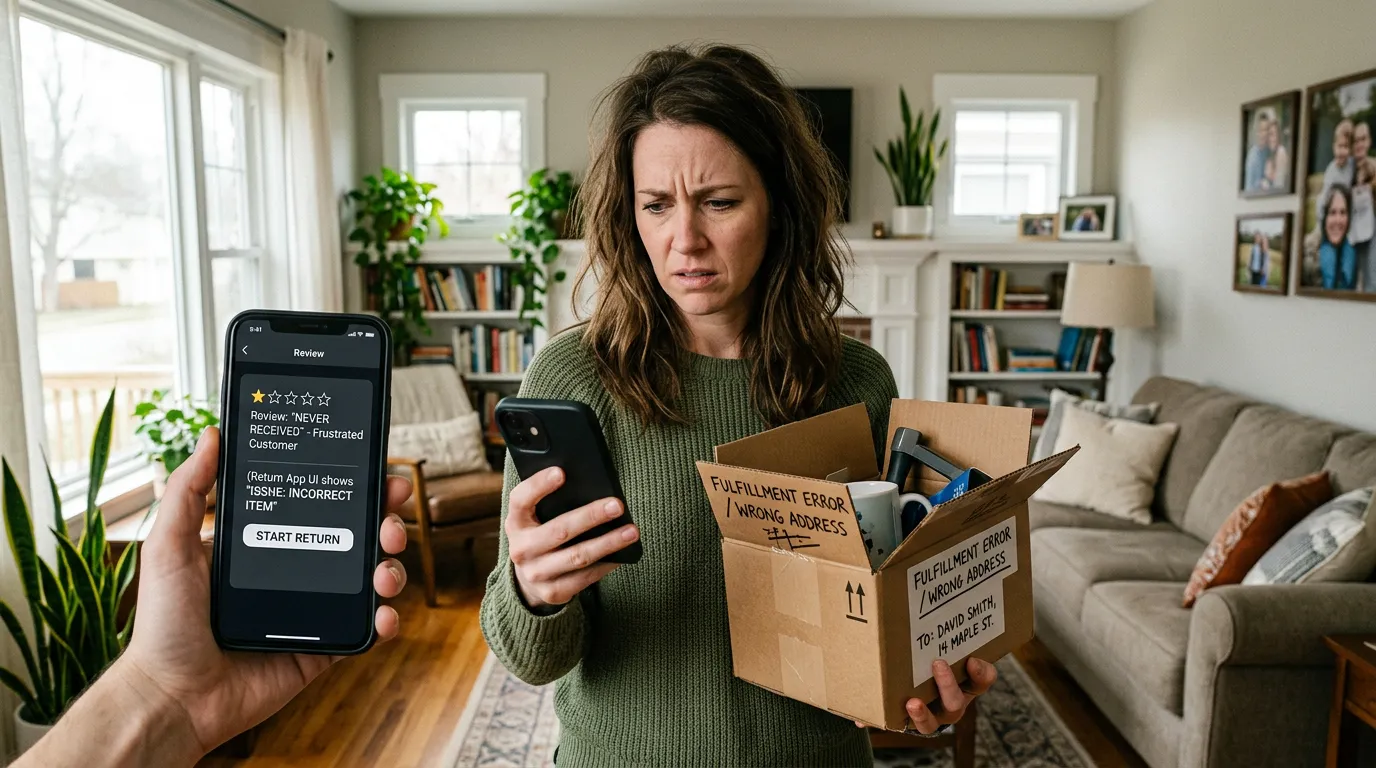
You just spent $40,000 on ads this month. Your click-through rates look great. Conversion is up. The sales are rolling in.
Then the returns start trickling in. Then the one-star reviews. Then the chargebacks.
A customer in Ohio got the wrong size. A customer in Texas got someone else's order entirely. A customer in Florida got the right product — three days late, in a crushed box.
Every one of those fulfillment errors just ate your ad spend for breakfast.
We work with brands every day who are pouring money into the top of the funnel — media, creative, marketplace optimization — while a quiet crisis bleeds them dry at the bottom. The crisis isn't dramatic. It doesn't show up in your ROAS dashboard. But it's real, it's expensive, and it compounds over time.
The crisis is fulfillment accuracy. Or more precisely, the lack of it.
The Math Most Brands Aren't Doing
Here's a question worth sitting with: do you know what a single mis-picked order actually costs your business?
It's not just the cost of the item. Not even close.
A mis-pick triggers a cascade. The customer contacts support — that's labor cost. They request a return — that's reverse logistics cost plus the original shipping you already paid for. You reship the correct item — that's a second fulfillment cycle. If the returned product can't be resold as new, that's inventory shrinkage. If the customer leaves a negative review on Amazon or Walmart, that's reputational damage that suppresses your organic ranking and drives up the cost of every future click.
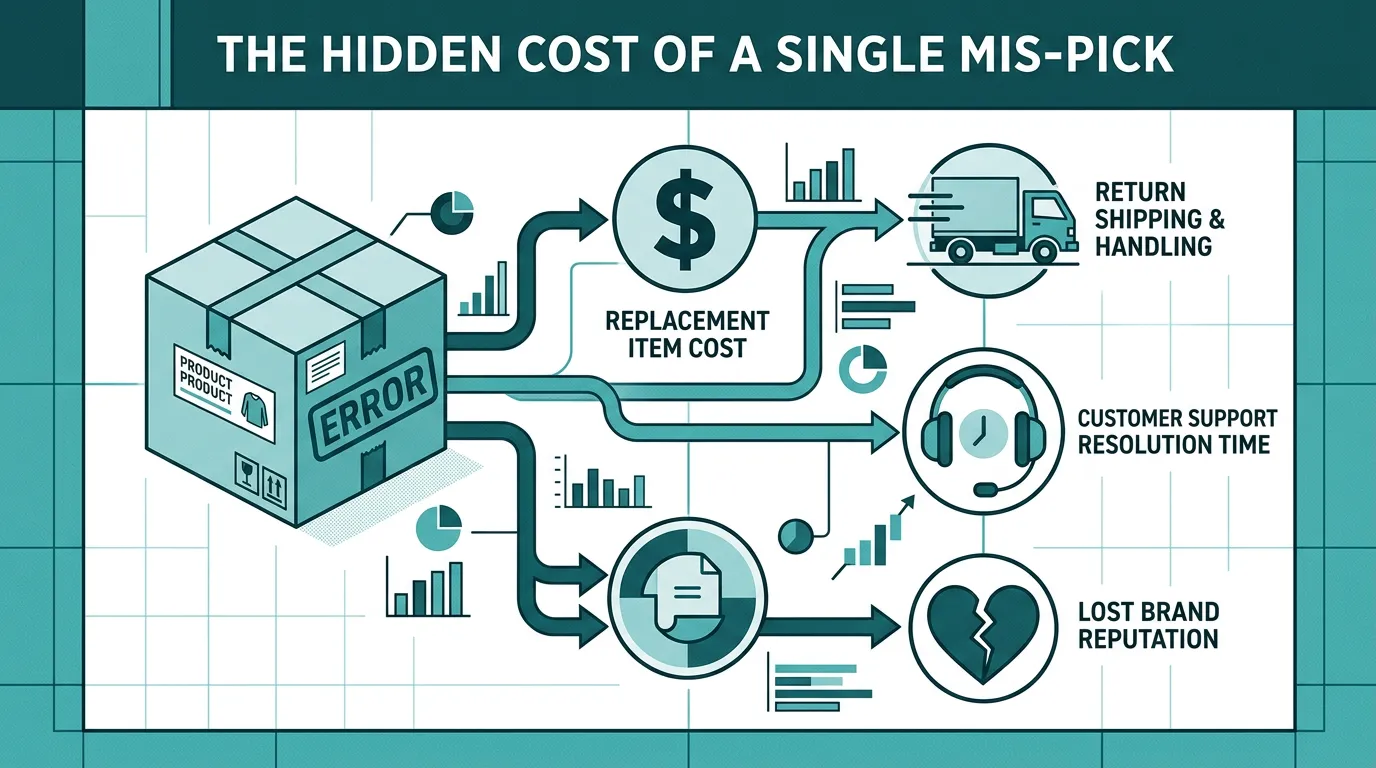
Industry estimates put the true cost of a single fulfillment error somewhere between $20 and $60, depending on the product category and channel. For some brands selling lower-margin goods, one wrong shipment can wipe out the profit on five or six correct ones.
Now multiply that by scale. If you're shipping 10,000 orders a month with a 97% accuracy rate — which sounds pretty good on paper — you're sending out 300 wrong orders every month. At even $30 per error, that's $9,000 a month vanishing. $108,000 a year. Gone. Not into growth. Not into inventory. Into fixing mistakes.
A 97% accuracy rate is not good enough. Not anymore.
Why Amazon and Walmart Punish You Twice
If you're selling on Amazon or Walmart's marketplace, fulfillment errors don't just cost you money — they cost you visibility.
Both platforms use seller performance metrics as direct inputs to their search algorithms and Buy Box eligibility. Amazon tracks your Order Defect Rate (ODR), which includes A-to-Z claims, chargebacks, and negative feedback. Walmart monitors similar metrics through its Seller Scorecard. Fall below their thresholds and you don't just lose a few sales. You lose placement. You lose the Buy Box. In extreme cases, you lose your account.
This is the part that keeps me up at night when I talk to brands who treat logistics as an afterthought.
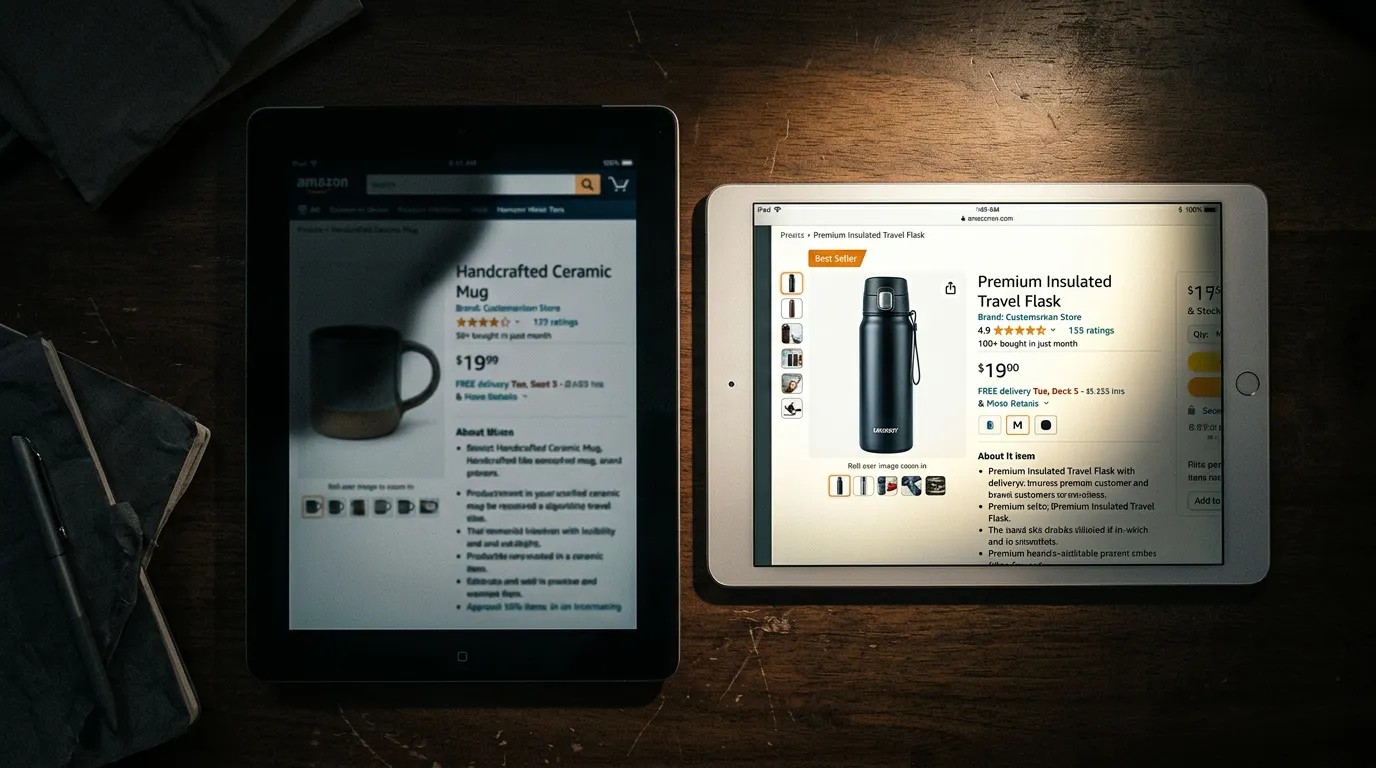
Your ad dollars drive traffic to a listing. If that listing has suppressed organic rank because of fulfillment-driven negative reviews, you're paying more per click to reach fewer buyers. You're essentially funding a leaky bucket and then wondering why you can't fill it.
The brands that win on these platforms — consistently, year after year — aren't just the ones with the best creative or the smartest bidding strategies. They're the ones who ship the right product, to the right person, on time, every single time. Or as close to every single time as humanly possible.
What 99.97% Actually Looks Like
We ship over 100,000 orders per month. Our order accuracy rate is 99.97%.
That means out of 100,000 orders, roughly 30 have an issue. Not 300. Not 3,000. Thirty.
That number isn't accidental. It's the result of systems — warehouse management technology, barcode verification at multiple checkpoints, quality control processes that catch errors before they leave the dock. It's the result of people who understand that a shipping label isn't just a label. It's a promise.
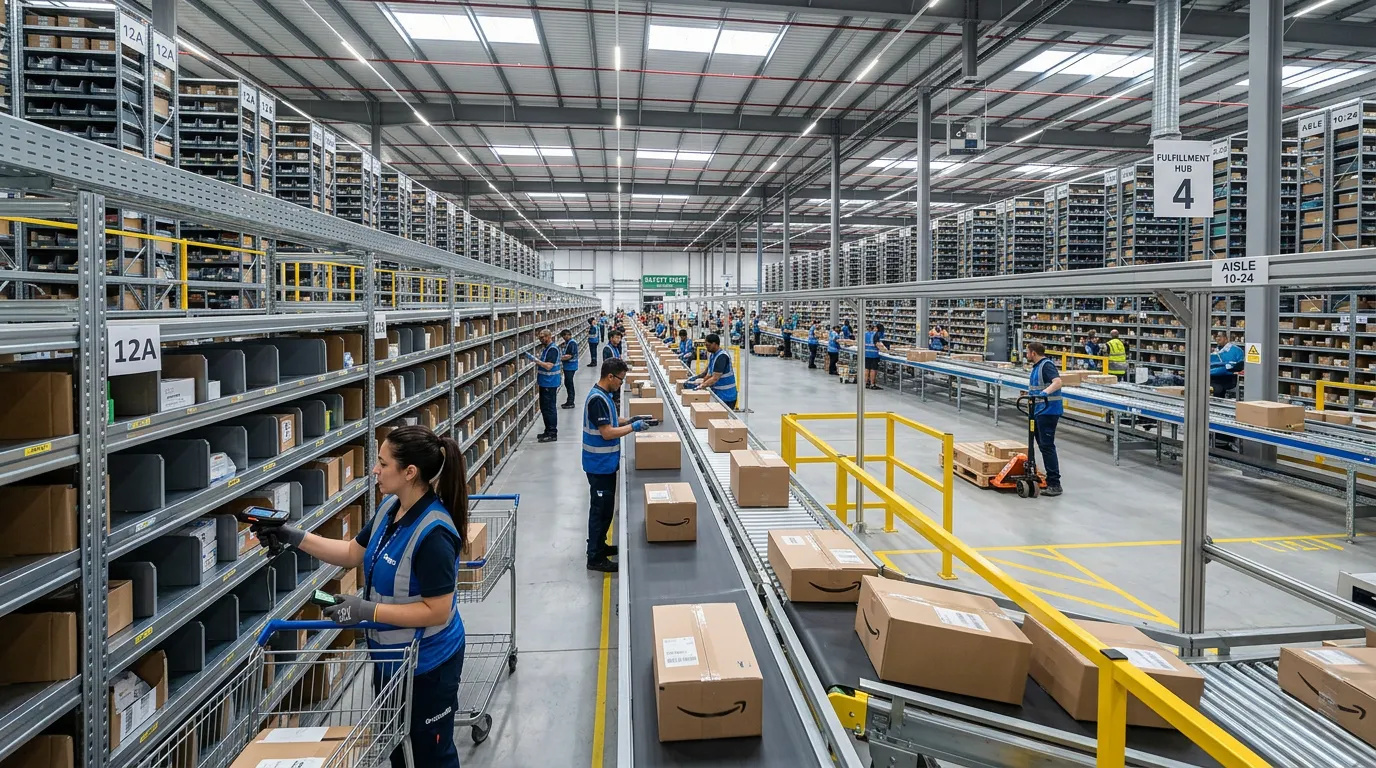
But here's the thing that matters more than the number itself: the compounding effect of getting it right.
When your fulfillment is airtight, your return rate drops. Your customer lifetime value goes up. Your reviews improve, which lifts your organic ranking, which lowers your customer acquisition cost, which means every ad dollar stretches further. It's a virtuous cycle, and it starts at the loading dock.
The Hidden Advantage of Integrated Commerce
Most brands treat their agency and their 3PL as separate vendors. The agency handles the marketing. The warehouse handles the shipping. And nobody talks to each other.
This creates blind spots.
Your media team launches a flash sale but nobody told the warehouse, so orders stack up and ship late. Your creative team redesigns the packaging but the new boxes don't fit the existing pick-and-pack workflow, so error rates spike. Your data team sees a surge in returns from a specific SKU but can't tell whether the problem is the product, the listing, or the fulfillment process.
When commerce operations are integrated — when data, media, creative, retail strategy, and logistics all sit under one roof — these problems get caught before they become expensive. A spike in returns on a particular product triggers an immediate investigation across the entire chain: Was it a listing error? A warehouse issue? A supplier quality problem? The answer comes fast because the teams share systems, data, and accountability.
That integration is what separates brands that grow from brands that just get bigger for a while before the cracks show.
Why "We'll Handle Fulfillment Ourselves" Usually Doesn't Age Well
I hear this constantly from growing brands: "We've got a warehouse. We've got a team. We can handle it."
And maybe you can — at your current volume. But what happens when you double? What happens during Q4, when order volume spikes 3x in six weeks? What happens when you expand from Amazon to Walmart, and suddenly you're managing two different sets of compliance requirements, shipping SLAs, and labeling standards?
In-house fulfillment scales linearly. You need more space, more people, more equipment, more management overhead — all at the exact moment your cash flow is already stretched by inventory purchases and ad spend. It's a trap that looks manageable right up until it isn't.
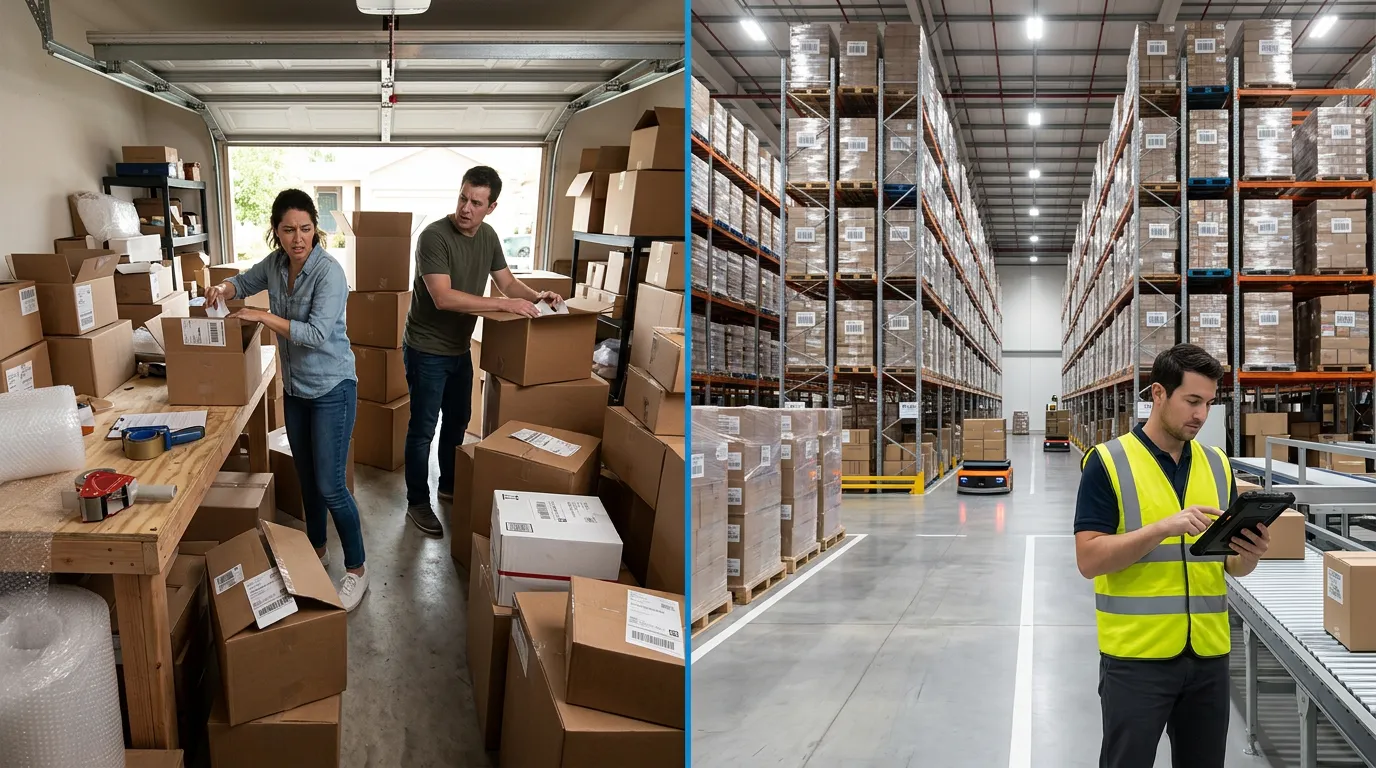
Outsourcing to a 3PL that understands your marketplace channels isn't just about convenience. It's about accessing infrastructure and expertise that would take years and millions of dollars to build internally. It's about converting a fixed cost into a variable one that flexes with your business. And critically, it's about partnering with an operation where fulfillment excellence isn't a side project — it's the entire job.
The Question You Should Be Asking
Most brand founders and e-commerce directors ask themselves: "How do I get more traffic? How do I improve my conversion rate? How do I lower my ACoS?"
Those are fine questions. But they're incomplete.
The question that separates the brands managing $2 million in annual sales from the ones managing $20 million is different. It's this: Where am I losing the customers I've already paid to acquire?
Nine times out of ten, the answer lives somewhere in the fulfillment chain. A late shipment. A wrong item. A damaged box. A return experience so frustrating the customer never comes back.
You already did the hard work. You built the product, created the listing, ran the ads, won the click, and closed the sale. The last thing — the very last thing — you should be doing is fumbling the handoff.
Fulfillment accuracy isn't glamorous. It doesn't make for exciting LinkedIn posts or flashy case studies. But after 15 years of managing sales across Amazon, Walmart, and retail channels — overseeing more than $2 billion in total retail sales — I can tell you plainly: the brands that obsess over getting this right are the ones that still exist five years from now.
The ones that don't? They're the ones who kept wondering why their ad spend wasn't working.
Getting fulfillment right at scale is hard. Getting it right while simultaneously managing marketplace strategy, creative, media, and data is even harder. That's exactly what we do — all day, every day. If your logistics operation isn't keeping pace with your growth ambitions, we should talk. Reach out for a free phone consultation, and we'll help you figure out where the leaks are and how to fix them.